Loading

Loading
Space & Extended Networking / Extended Network Architecture
A distributed communications architecture intended to extend connectivity between platforms, operators, and sensing layers across wide operating areas.
The Problem
The ASTERISM approach
ASTERISM is designed to put network governance on board: nodes are intended to reassign roles, arbitrate resources, and preserve custody of data autonomously through contact gaps, then reconcile when contact returns. It extends the same architecture DERECHO is developing at the tactical edge.
Designed For
On-board constellation governance through contact loss
Designed continuity from Earth orbit toward cislunar operations
Data custody preserved across extended contact gaps
One governance architecture from the tactical edge to orbit
System Relationships
Relationships describe design intent between systems in development, not implemented or fielded integration.
Gallery
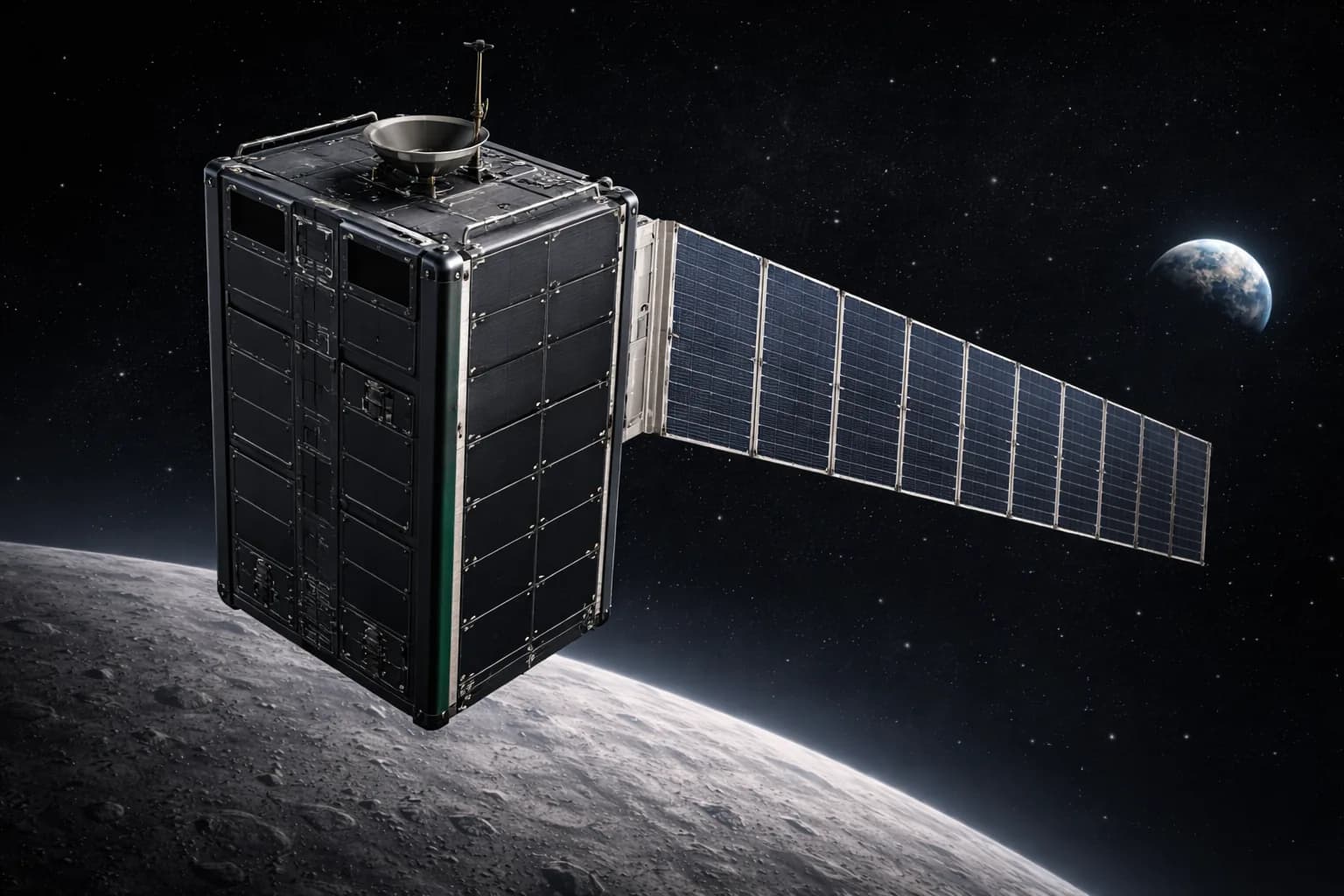
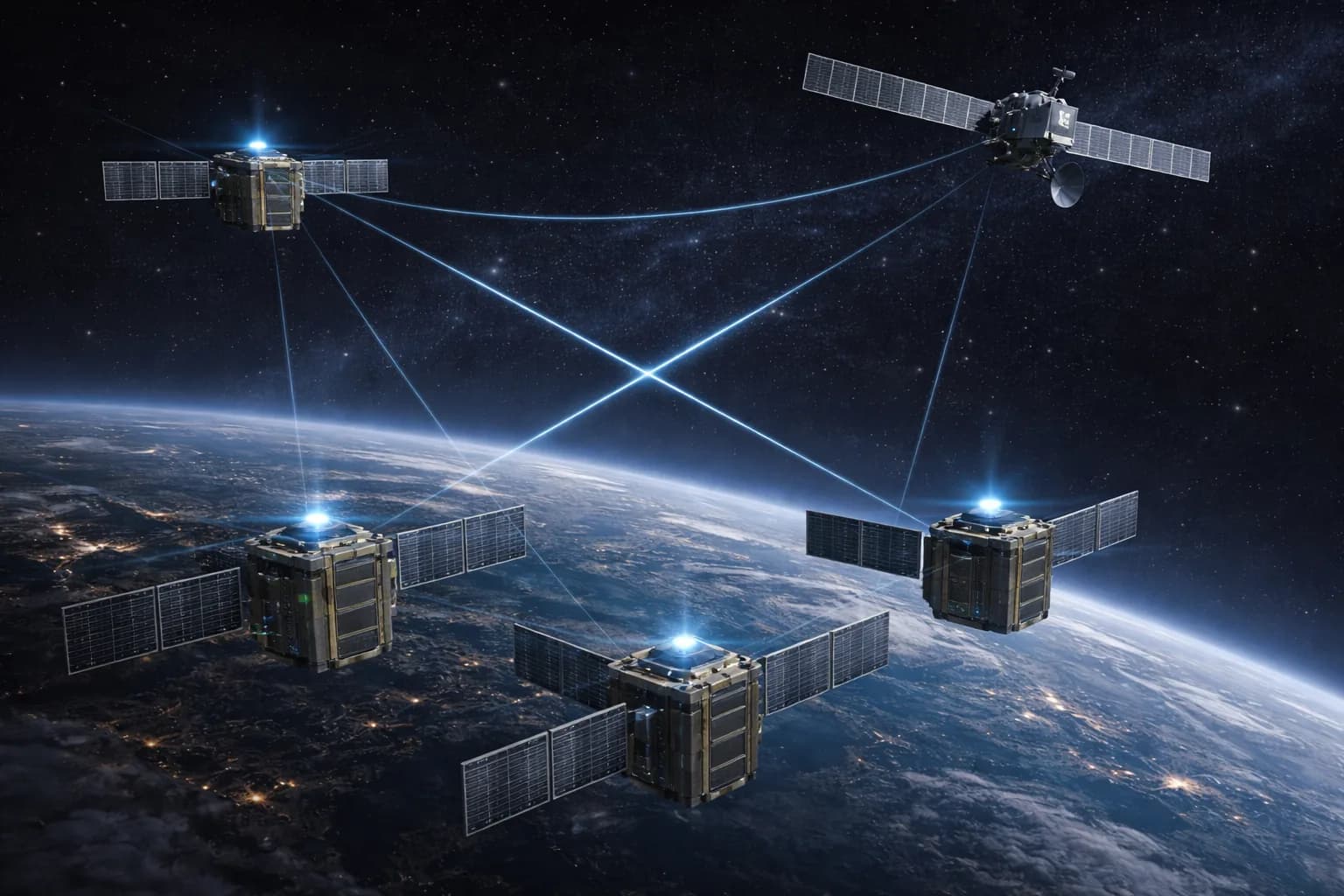
Some imagery on this website is rendered, illustrative, or produced with AI-assisted tools and may depict concepts rather than completed capabilities, conducted tests, or actual operations.
The Far-Side Problem
On the lunar far side there is no line of sight to Earth. An asset there cannot phone home; without a relay overhead, its data waits. Relay windows are scarce, and at cislunar range light-time delay makes ground-in-the-loop control impractical. The system has to decide alone.
ASTERISM approaches this as a governance problem: decisions about when, how, and through which path to move data are designed to live on board. When no path exists, the record is designed to be held under custody and forwarded the moment a link opens, across occlusion, delay, and denial.
The same design intent extends toward deeper operating volumes, where round-trip delay rules out ground control entirely.
Designed for volumes where a direct Earth link cannot exist, not merely where it is degraded.
Role assignment, resource arbitration, and data-movement decisions designed to be made without a ground loop.
Data held and forwarded under a preserved chain of custody as links close and reopen.
The orbital tier of the FORGEMESH governance architecture, extended, not reinvented.
Operating Picture
Notional operating regions for systems in development. Nothing shown is a real trajectory, deployment, or fielded node.
Limitations
ASTERISM is a software architecture in development. No article has flown, no on-orbit demonstration has been conducted, and no relay node exists in orbit. It is not a satellite bus, an imaging service, a transfer vehicle, or an operating constellation, and this page does not claim coverage, performance, or availability of any kind.
The concept is published at this level of candor deliberately: the architecture is the product of record today, and flight claims will follow flight evidence.
Quantum Timing, Sensing & Communications Research
Precision timing is the quiet dependency of every layer below: navigation, fusion, and networking all stand on a clock. Space is where atomic timing references have already proven themselves, and where the research frontier of free-space optical and quantum communications runs.
The ASTERISM research thread studies how a developmental orbital tier could extend timing continuity to airborne platforms, relay quantum-derived measurements across contact gaps, and carry the same crypto-agile, post-quantum-migrating trust architecture as the tactical mesh, with free-space optical and quantum-communications techniques as long-horizon research subjects, not capabilities.
ASTERISM is not an operational quantum network. Nothing is on orbit; no quantum satellite, QKD service, entanglement distribution, or space-qualified sensor exists or is claimed.
Atomic transition and pulse cadence, the timing motif of the quantum section. Illustrative, notional.
System in development. Configurations, capabilities, and imagery shown are developmental, illustrative, or notional and are subject to change. No ASTERISM article has flown and no on-orbit demonstration has been conducted.